
St.Pol HC’s Master in Hospitality Management, second place nationally in the 2026 ranking of the best master’s degrees by El Mundo
29 June, 2026
MCEU Hospitality: Advancing Towards the Future of Micro-Credentials in the European Hospitality Sector
10 July, 2026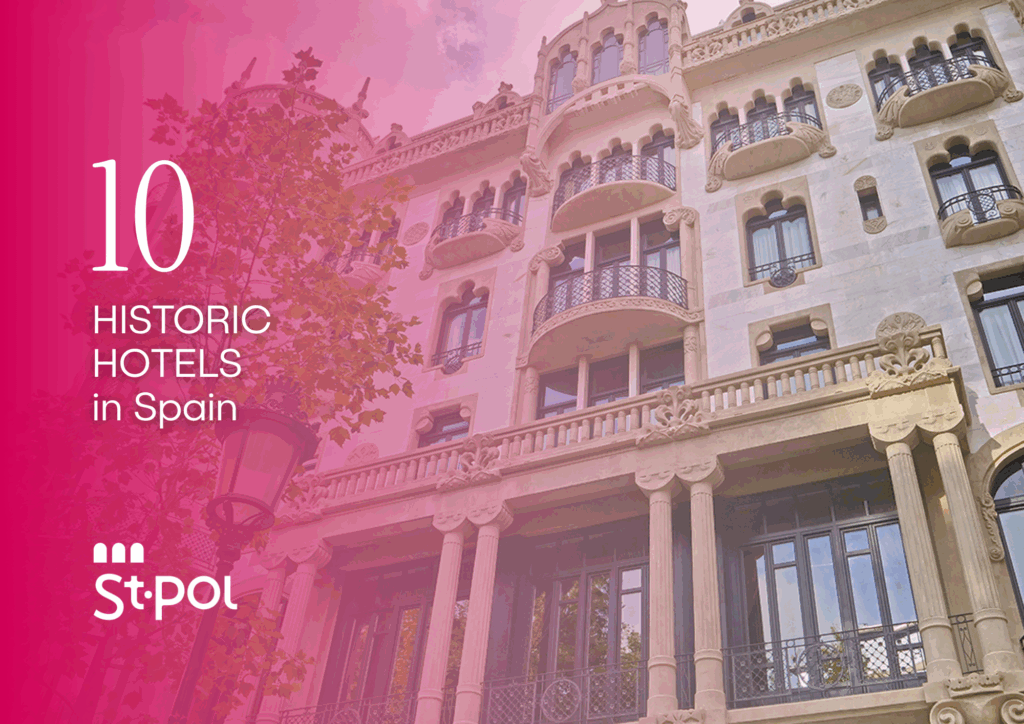
Spain is home to some of the most fascinating historic hotels in Europe. From former pilgrim hospitals to grand palaces built for royalty, these establishments have witnessed centuries of history, welcomed world-renowned guests, and evolved alongside the tourism industry.
More than just accommodation providers, historic hotels offer valuable lessons in hospitality management. Their ability to preserve their identity while adapting to changing guest expectations has allowed them to remain relevant for decades and in some cases, centuries.
Here are ten of Spain’s most iconic historic hotels and the stories that make them unique.
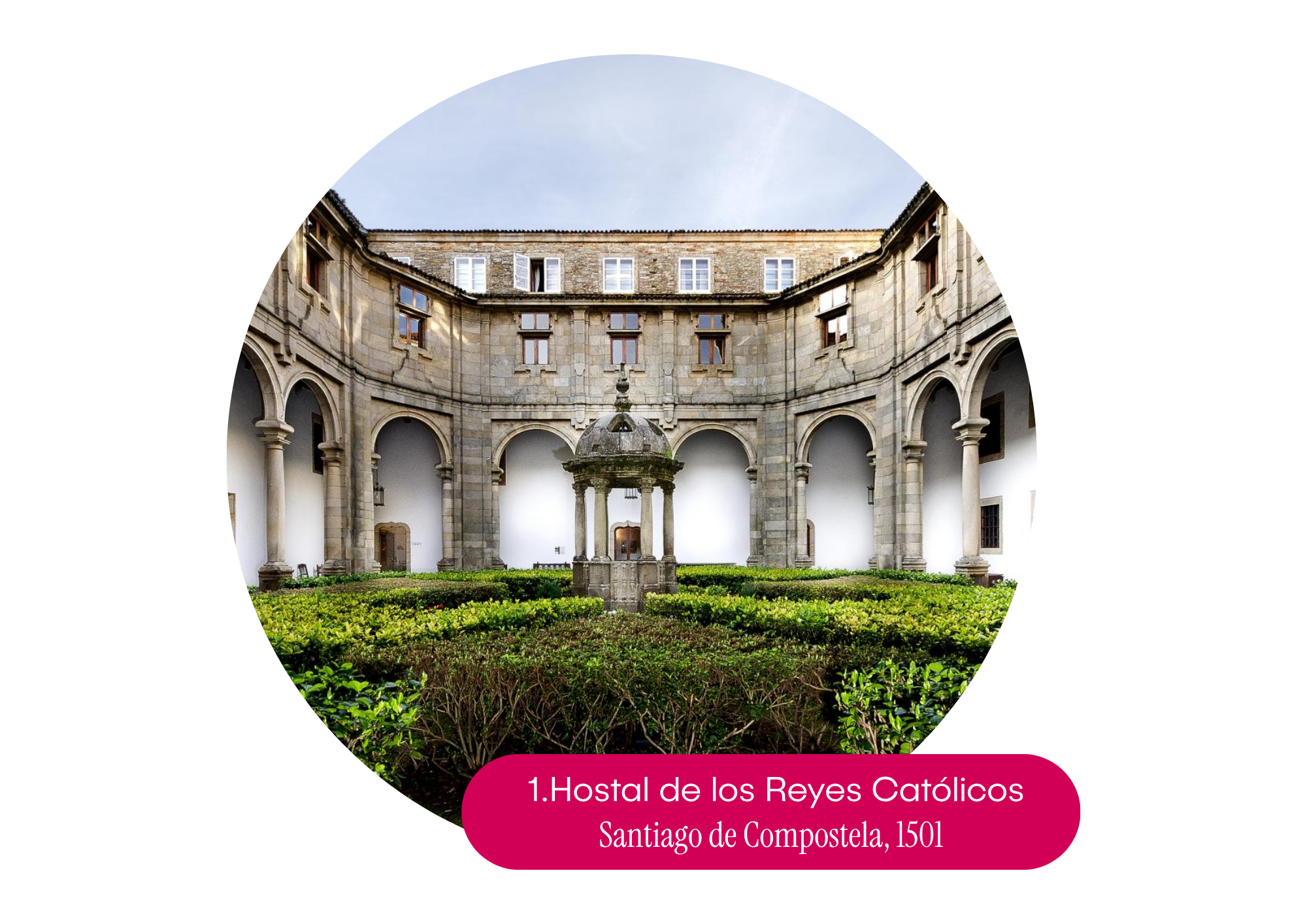
1.Hostal de los Reyes Católicos: five centuries of hospitality
Situated in the Plaza del Obradoiro, opposite the Cathedral of Santiago de Compostela, the Hostal de los Reyes Católicos was founded in 1501 on the initiative of Isabella I of Castile and Ferdinand II of Aragon to accommodate pilgrims completing the Camino de Santiago. Today it forms part of the Paradores network and is considered one of the oldest operating hotels in the world.
A stroll through its cloisters takes you on a journey through more than five hundred years of history. What began as a hospital for pilgrims has been transformed into one of Spain’s most prestigious hotels.
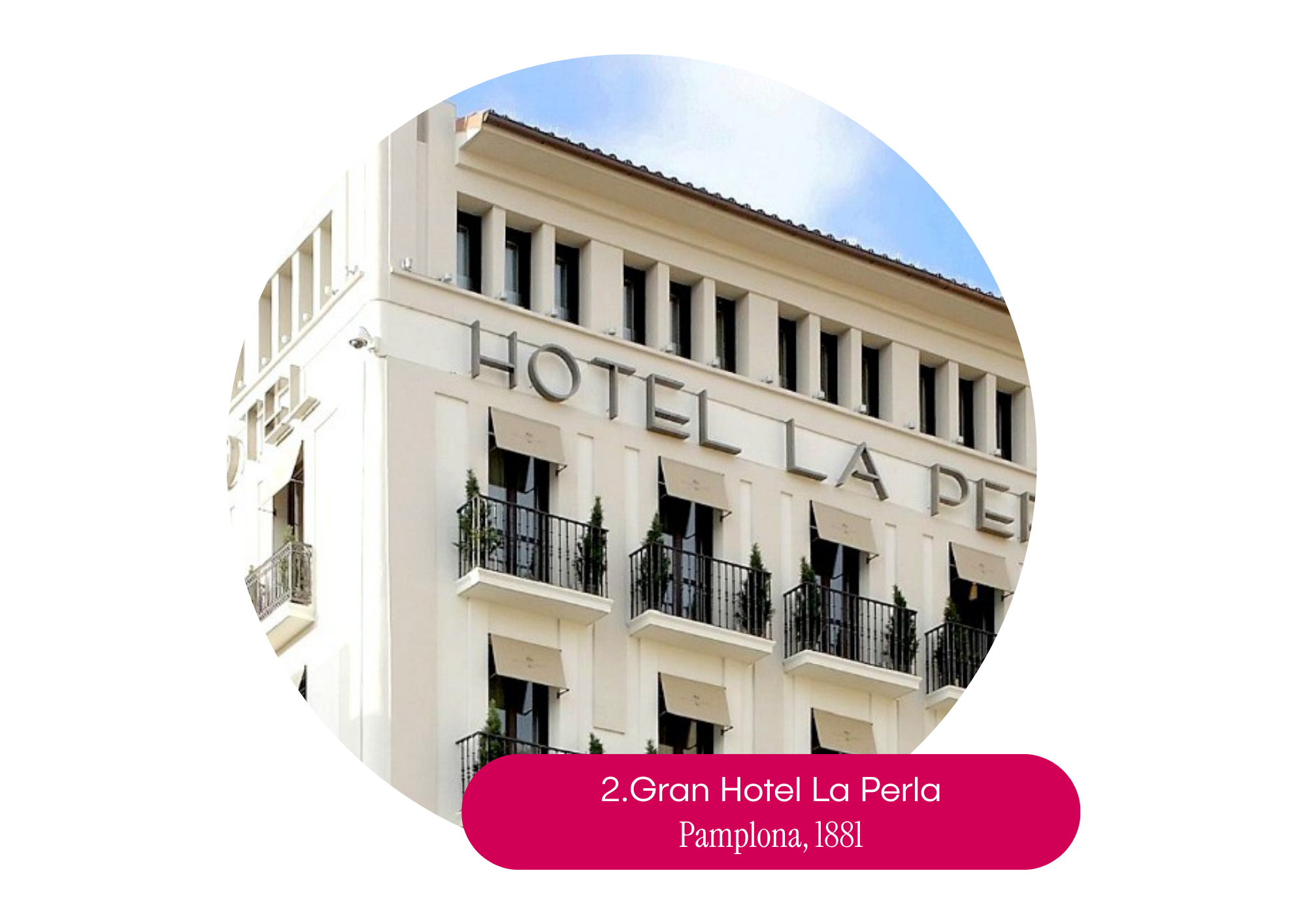
2.Gran Hotel La Perla: the soul of Pamplona
Founded in 1881 in the Plaza del Castillo, the Gran Hotel La Perla is one of the country’s most renowned historic establishments. Its prime location, right on the route of the San Fermín bull runs, has contributed to its international fame.
Throughout its history, it has welcomed such figures as Charles Chaplin, Orson Welles and Pablo Sarasate. The hotel still has rooms dedicated to some of its illustrious guests, turning a stay there into a truly historic experience.
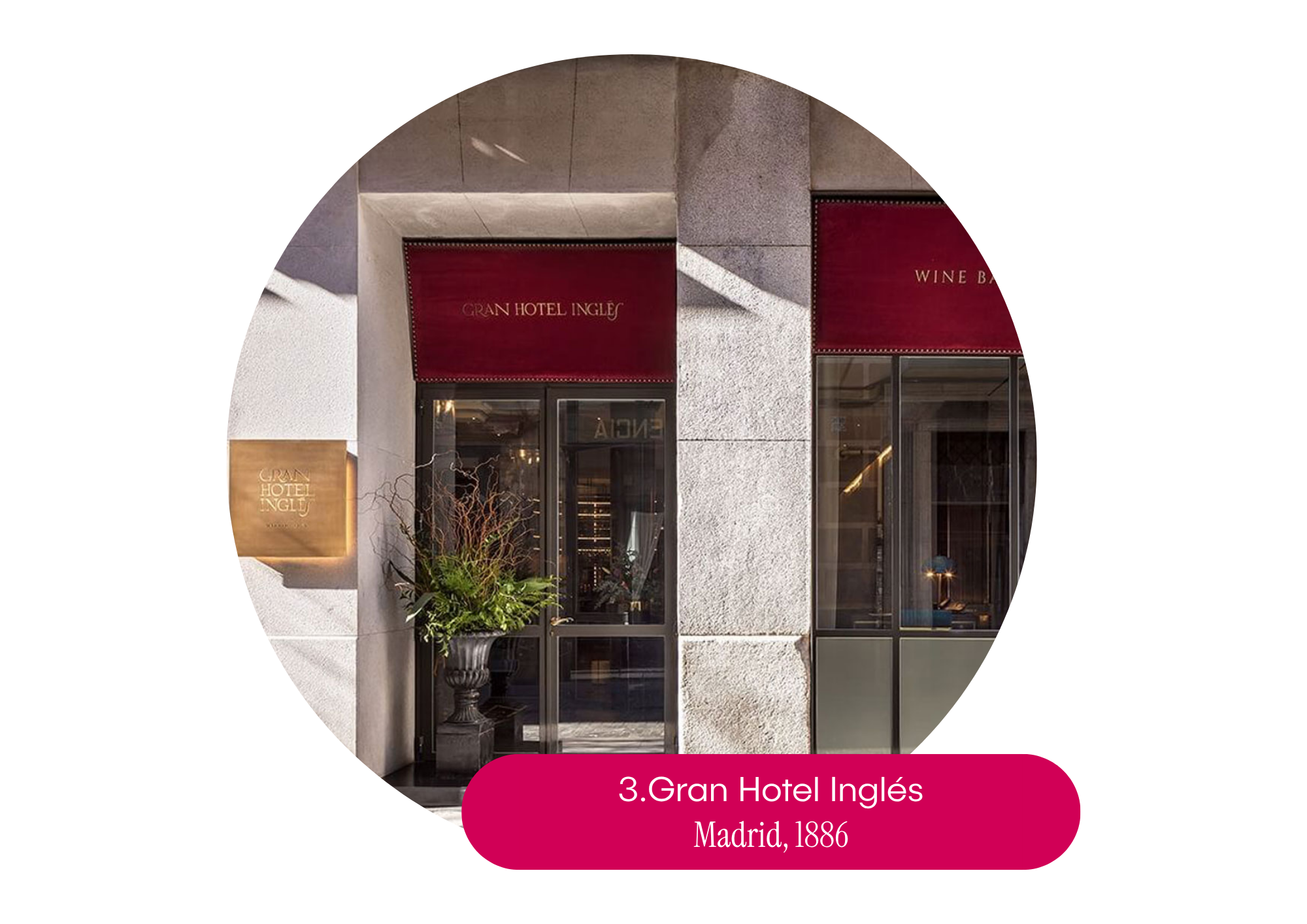
3.Gran Hotel Inglés: the pioneer of luxury in Madrid
Opened in 1886, the Gran Hotel Inglés is considered to be the oldest luxury hotel in Madrid. It was one of the first establishments to incorporate technological innovations that were unusual for the time, such as electric lighting and modern amenities.
Located in the Barrio de las Letras, it remains a benchmark for luxury hospitality in the capital.
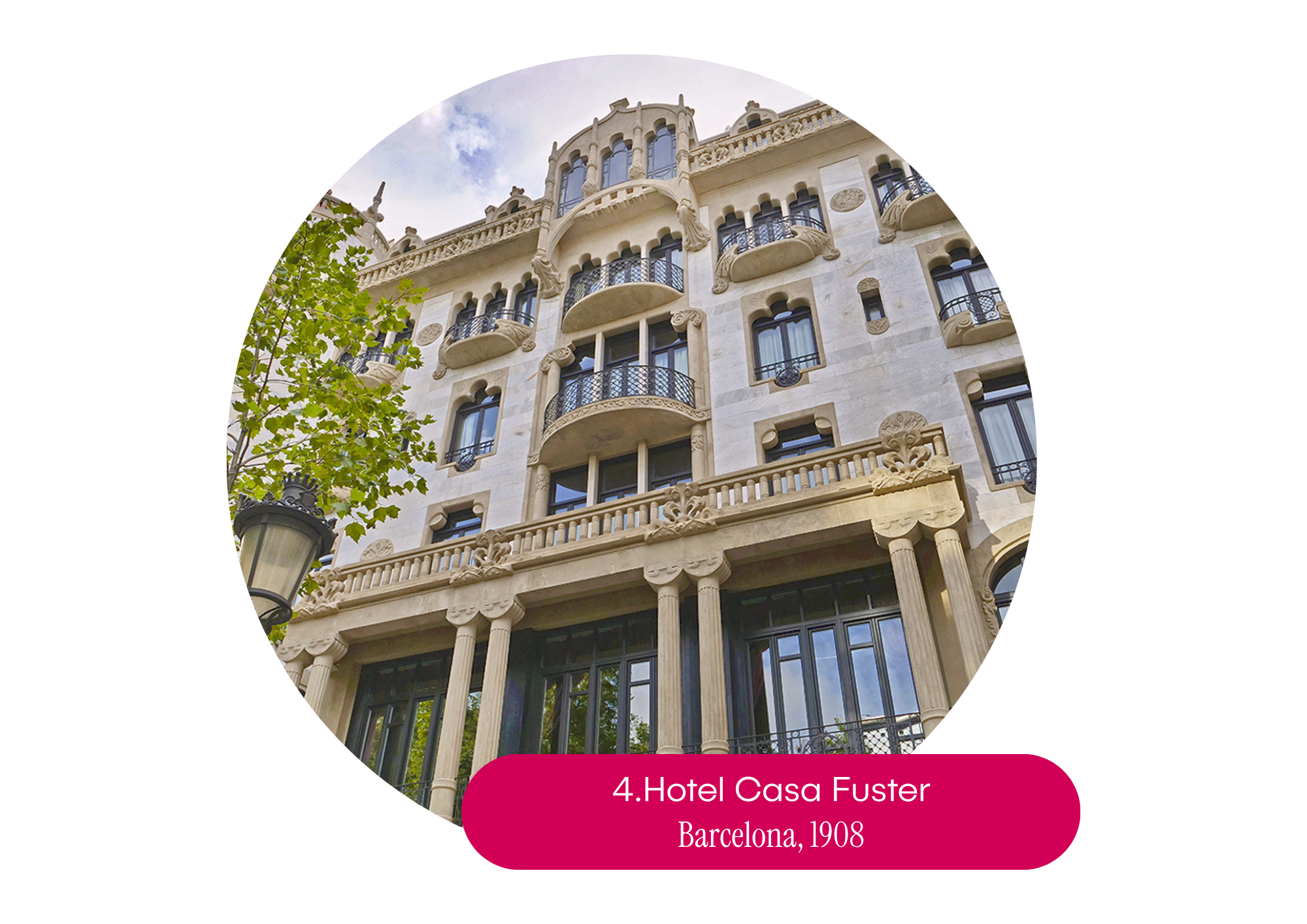
4.Hotel Casa Fuster: Barcelona’s Modernist gem
Built in 1908 by the architect Lluís Domènech i Montaner, the Hotel Casa Fuster is one of the finest examples of Catalan Modernism applied to the hospitality industry.
The building was originally designed as a private residence and was later converted into a hotel. Its location at the end of Passeig de Gràcia makes it one of Barcelona’s most iconic buildings.
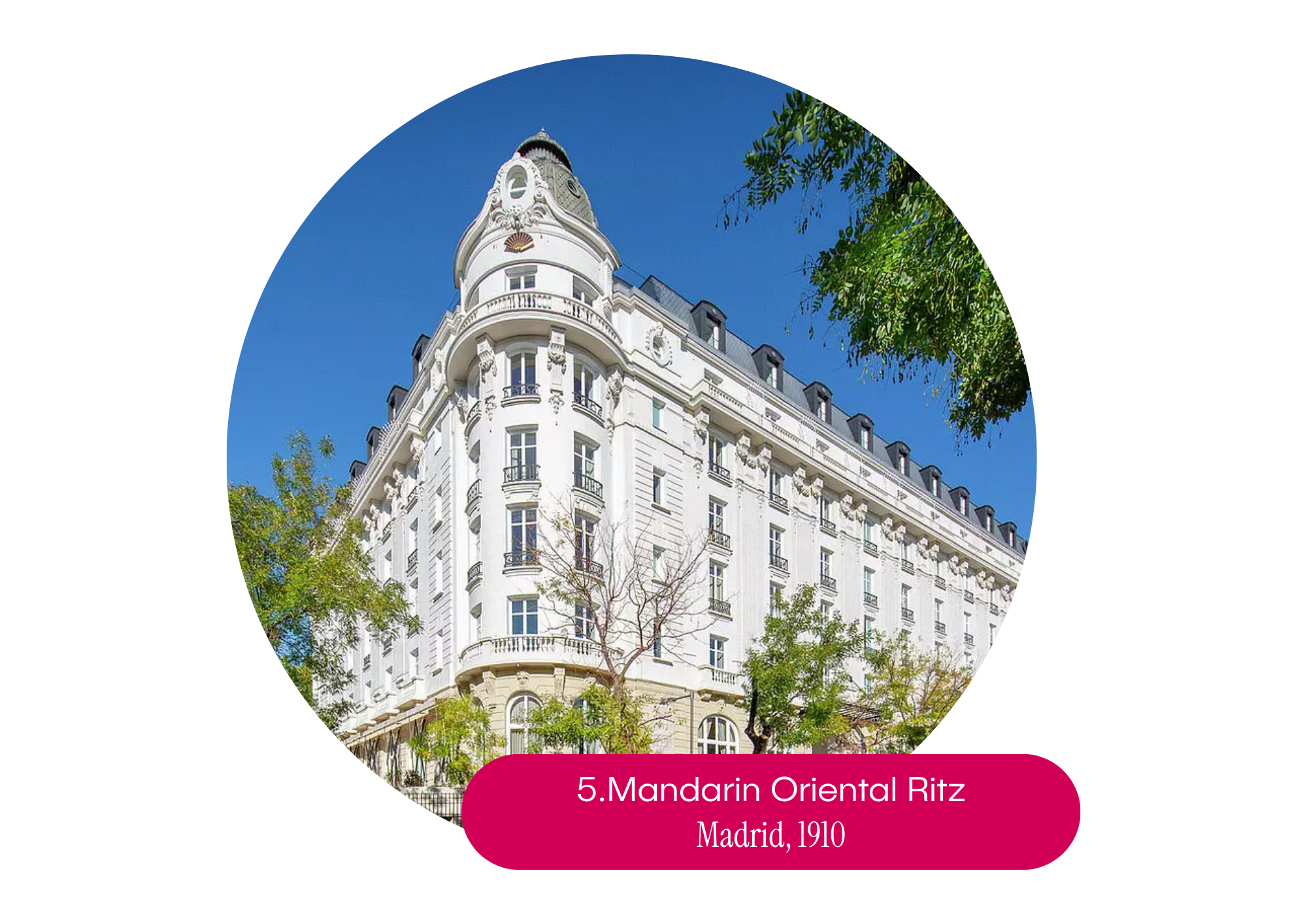
5.Mandarin Oriental Ritz: the hotel that transformed Madrid
When it opened its doors in 1910, the Ritz marked a turning point in the Spanish hotel industry. It was established at the instigation of Alfonso XIII with the aim of providing Madrid with a hotel capable of competing with the great European establishments.
Its rooms have hosted figures such as Albert Einstein, Salvador Dalí, Pablo Picasso, Rita Hayworth and Frank Sinatra. More than a century later, it remains one of the great symbols of Spanish luxury hospitality.
6.Hotel María Cristina: the Belle Époque glamour
Since it opened in 1912, the Hotel María Cristina has been closely linked to the cultural life of San Sebastián. Its construction coincided with the city’s rise as a destination for the European aristocracy and the Spanish bourgeoisie.
Notable guests have included Coco Chanel, Audrey Hepburn, Alfred Hitchcock, Steven Spielberg and Mick Jagger. Today, it remains the hotel of choice during the San Sebastián International Film Festival.
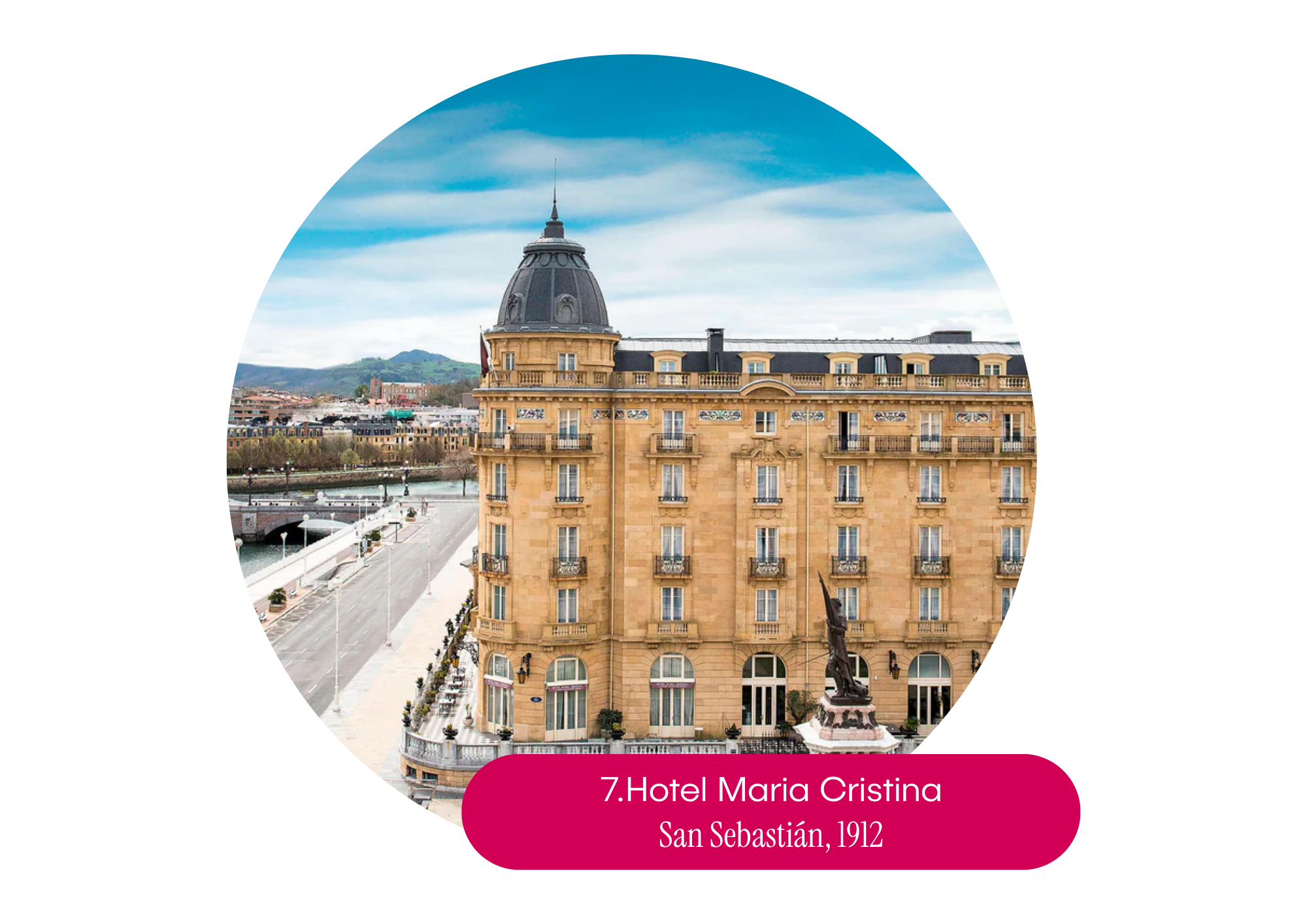
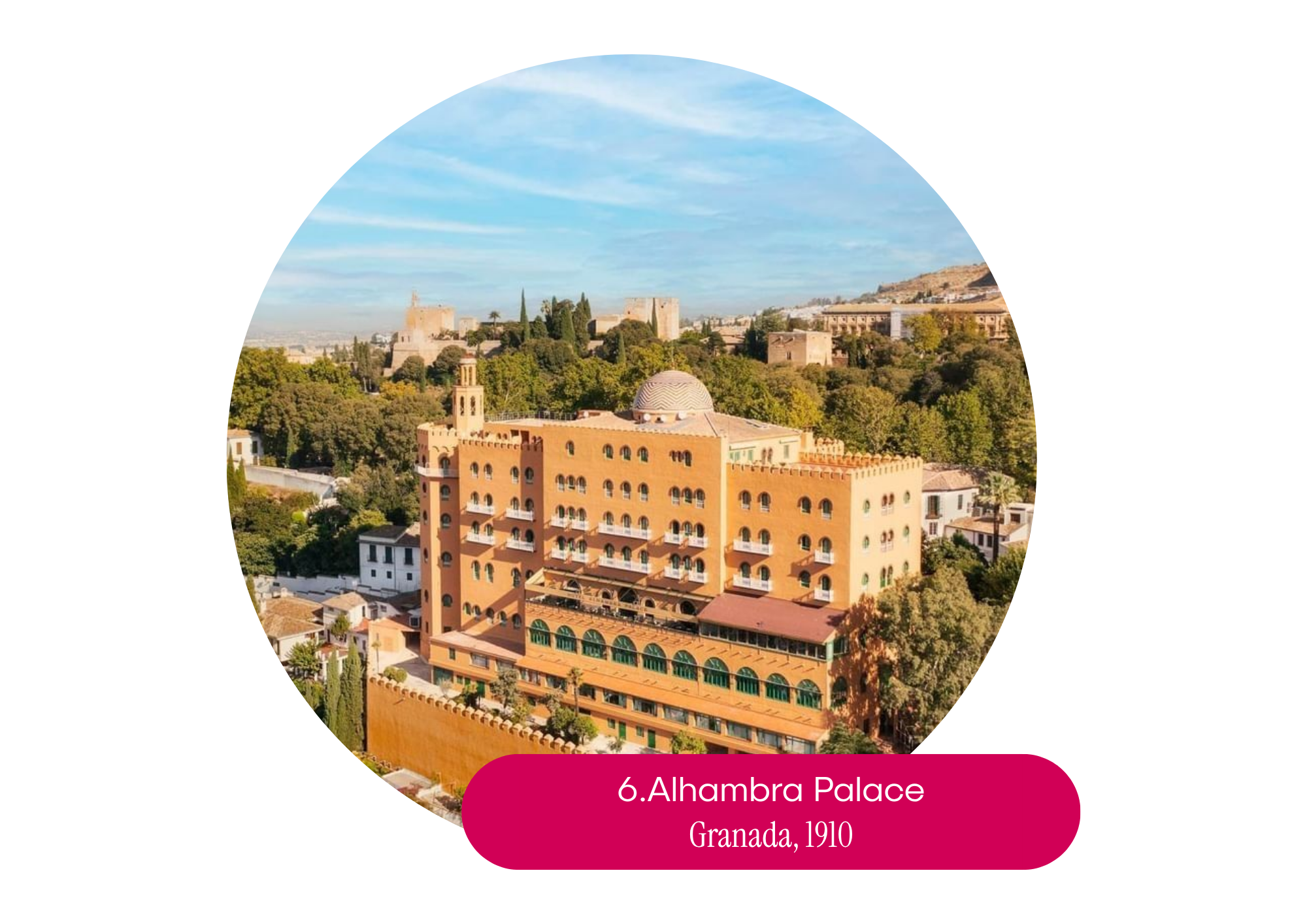
7.Alhambra Palace: sleep next to the Alhambra
Opened in 1910, the Alhambra Palace Hotel was built with the aim of offering luxury accommodation to visitors to Granada. Its architecture is inspired by Nasrid art, and its views over the city have made it one of the most photographed hotels in Spain.
Throughout its history, it has welcomed artists, politicians and members of the royal family.
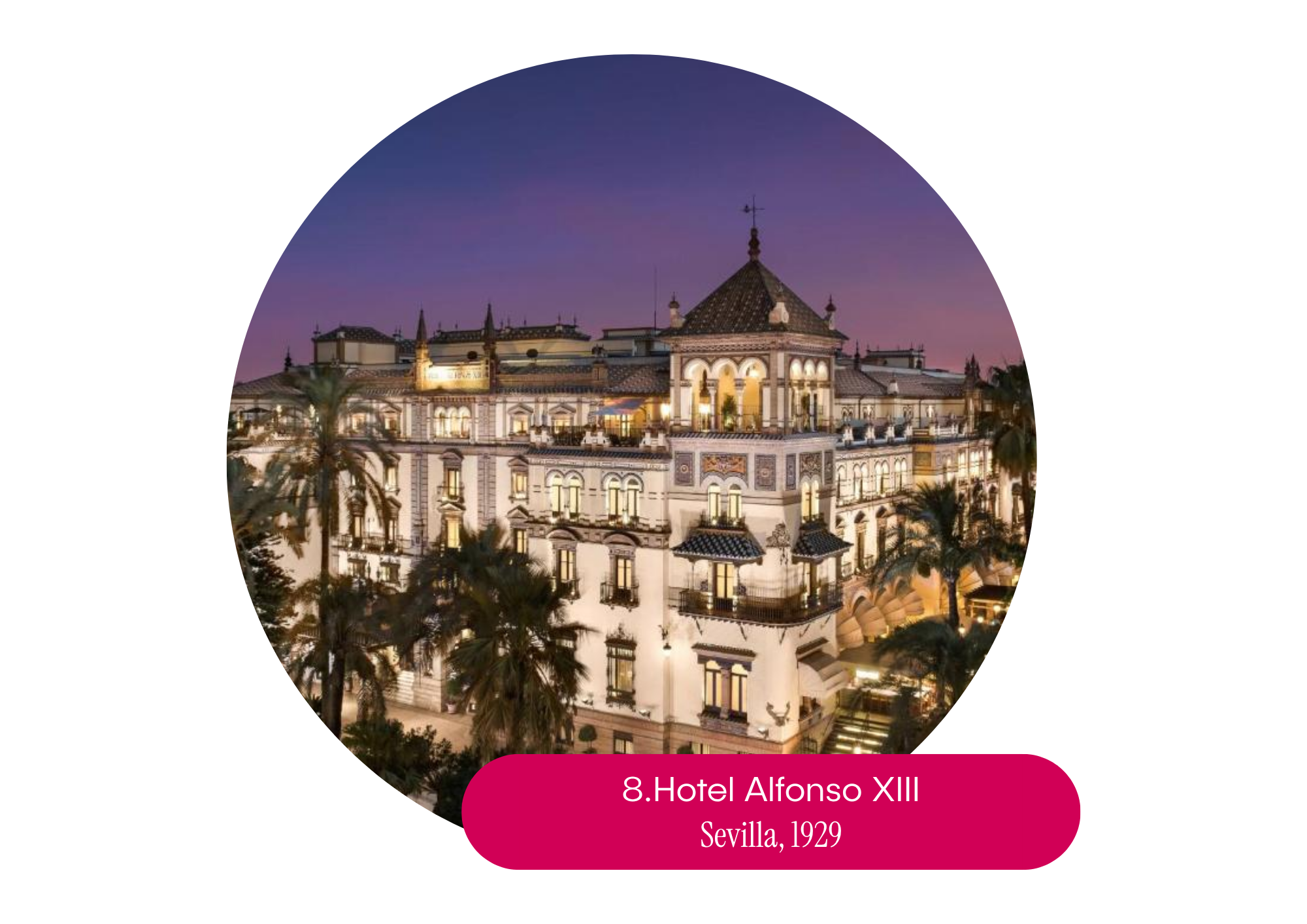
8.Hotel Alfonso XIII: the grand hotel in Seville
The Hotel Alfonso XIII was commissioned by King Alfonso XIII to accommodate the dignitaries attending the 1929 Ibero-American Exposition. Its Neo-Mudejar architecture and its location alongside Seville’s main monuments have made it one of the most prestigious hotels in the world.
Its guests have included members of royal families, heads of state, international artists and Hollywood stars. Even part of the cast and crew of ‘Lawrence of Arabia’ stayed there whilst the film was being shot.
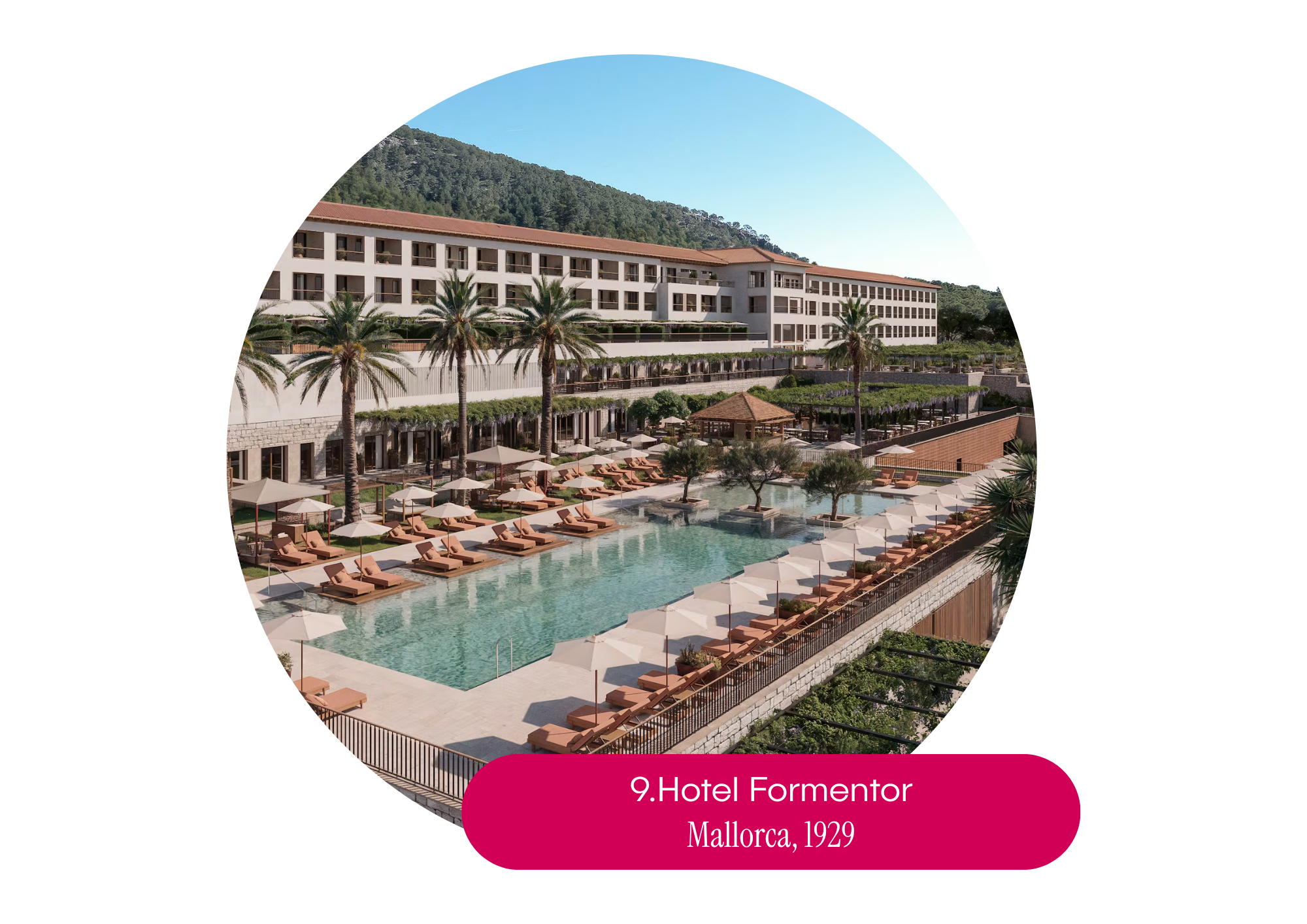
9.Hotel Formentor: a haven for artists and intellectuals
Opened in 1929 in the north of Mallorca, the Hotel Formentor quickly became a meeting place for writers, musicians, politicians and artists.
Its guest list has included such figures as Winston Churchill, Grace Kelly, Audrey Hepburn and Charles Chaplin, cementing its reputation as one of the most exclusive hotels in the Mediterranean.
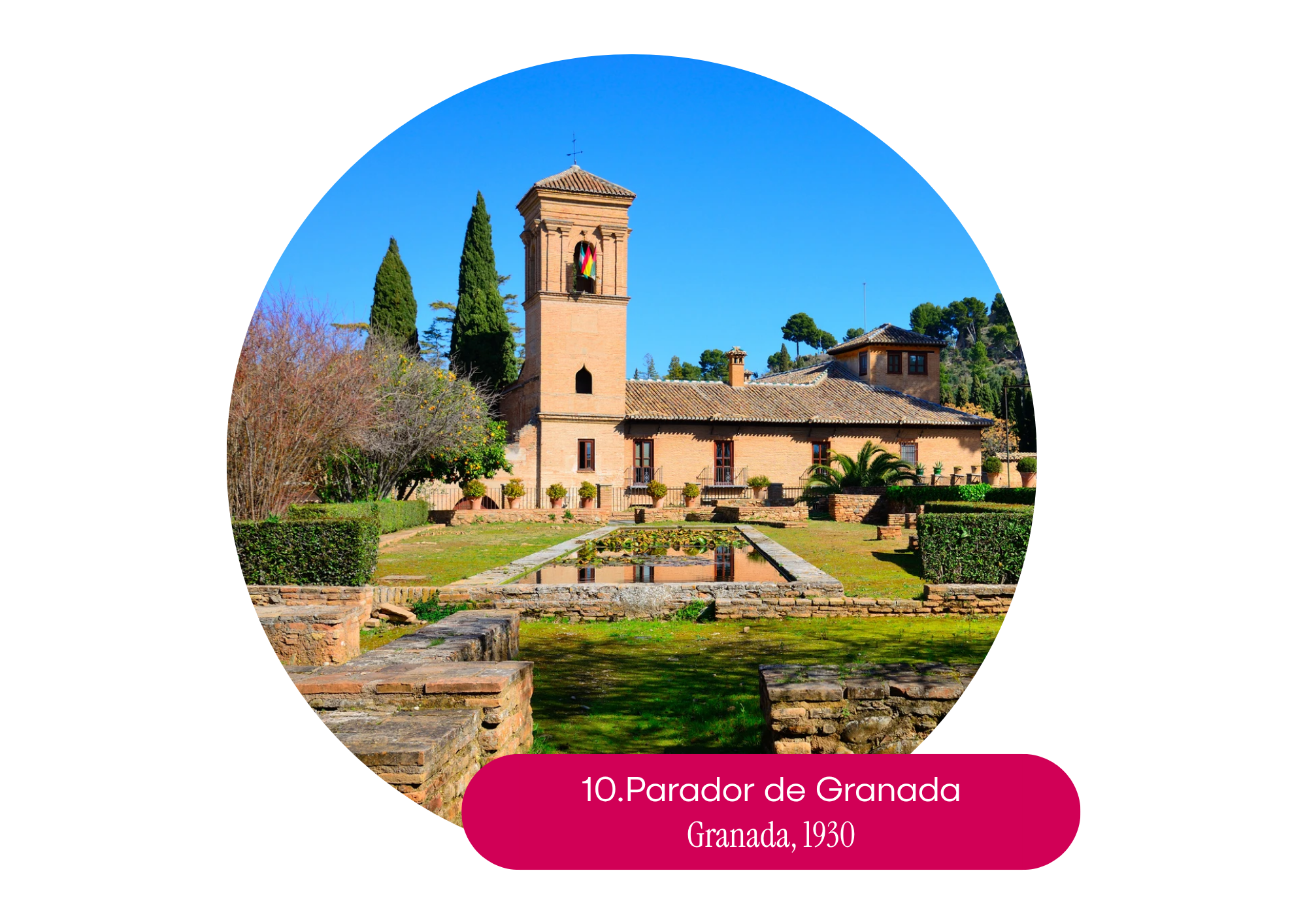
10.Parador de Granada: a night inside the Alhambra
Few hotels can boast of being situated within one of the world’s most visited monuments. The Parador de Granada is housed in a former convent built on the orders of the Catholic Monarchs on the ruins of a Nasrid palace.
Staying at this hotel allows you to enjoy the Alhambra once most visitors have left, offering an experience that is hard to match. Furthermore, its most famous guests include Grace Kelly and Rainier of Monaco during their honeymoon.
What do these historic hotels have in common?
Although they belong to different periods and styles, they all share several key elements:
- A clearly defined brand identity.
- A strong connection with the destination.
- The ability to adapt to changes in the market.
- A constant commitment to excellence in service.
- The preservation of its architectural and historical heritage.
What can future hotel managers learn?
These hotels demonstrate that longevity in the hospitality industry does not depend solely on the facilities. The key lies in creating memorable experiences, maintaining a consistent value proposition and knowing how to evolve without losing sight of one’s essence.
In an increasingly competitive sector, historic hotels serve as an example of how to combine tradition, innovation and operational excellence to remain relevant generation after generation.
Spain’s historic hotels are much more than just places to stay. They form an essential part of the country’s cultural and tourist heritage and continue to attract travellers from all over the world thanks to their history, architecture and excellent service.
From former pilgrims’ hospitals to luxurious city palaces, these establishments demonstrate that tradition and innovation can coexist successfully. Their histories offer valuable lessons for new generations of professionals who aspire to lead the future of the hospitality industry.







 CALL US
 WHATSAPP