
What are Michelin Stars and what is their true origin?
16 January, 2026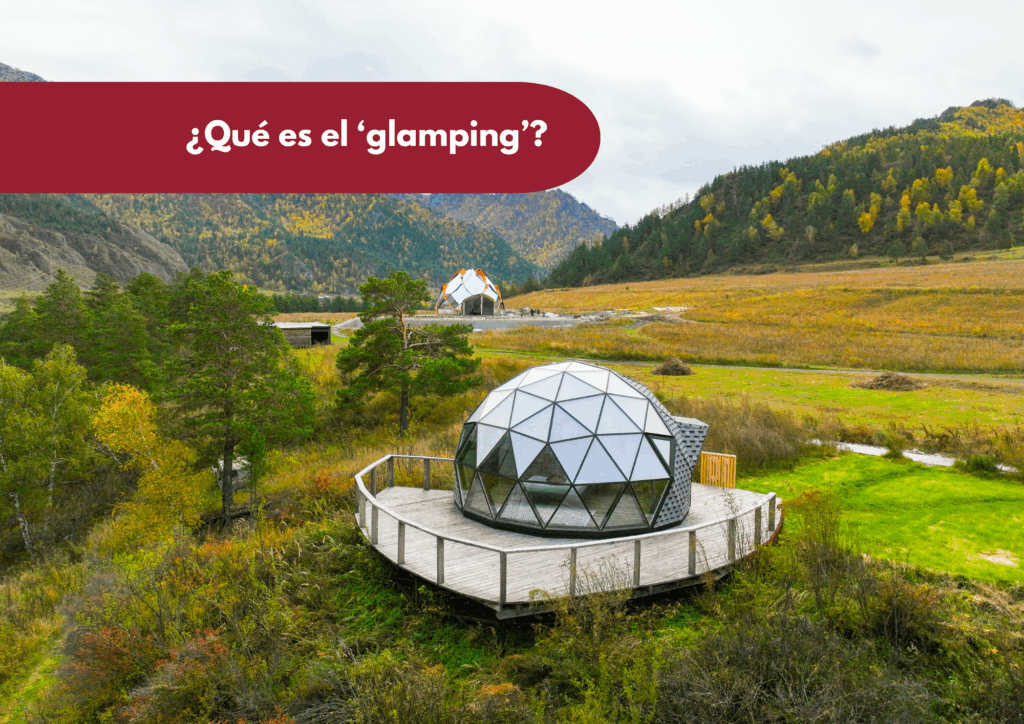
Everyone enjoys being in nature, but not everyone is willing to give up comfort. Sleeping on the ground, not having a shower, or being unable to charge your phone doesn’t always match the idea of rest we are looking for. From this need, glamping was born—a type of accommodation that combines nature with comfort.
Glamping has become a key trend in sustainable and experiential tourism, highly valued by travelers who want to disconnect without giving up some of the everyday comforts.
What is glamping and where does it come from?
The term glamping comes from combining the words glamour and camping. It refers to a type of accommodation that allows you to experience sleeping in nature while enjoying services and amenities similar to those of a hotel.
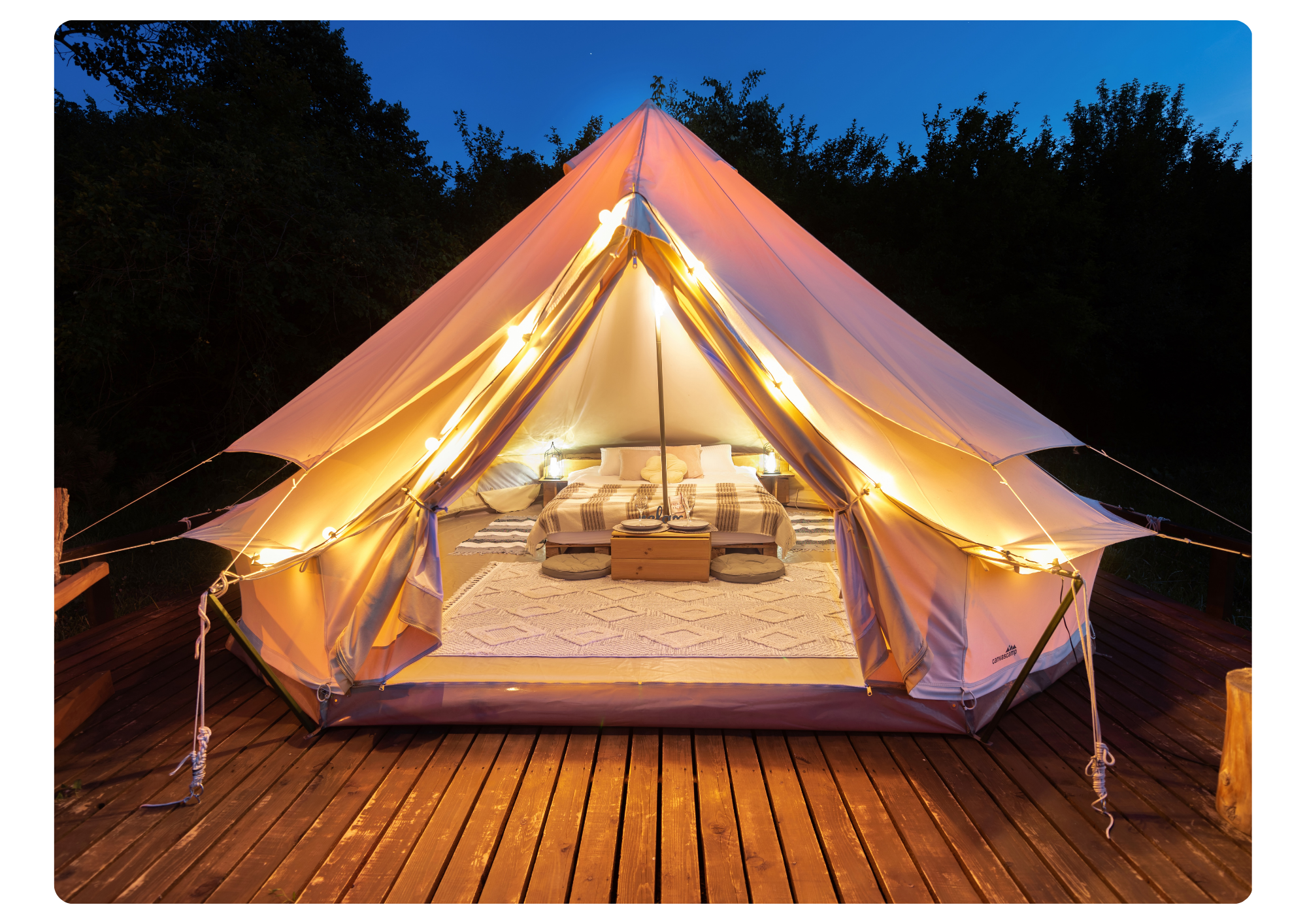
Glamping accommodations are usually larger than traditional tents and are designed for stays of several days. Inside, it’s common to find large beds, furniture, electricity, lighting, and often a private bathroom.
Although the term has become popular only recently, the concept of glamping dates back to the late 19th century. Large tents used on safaris and expeditions already offered a nature-based lodging experience with a certain level of comfort.
Today, glamping revives this idea and adapts it to modern travelers’ needs: connection with the environment, sustainability, design, and a unique experience.
Features of Glamping Accommodation
While not all glamping sites are the same, they often share common features:
- More solid structures than conventional camping tents.
- Beds with frames and home-like furniture.
- Access to electricity and lighting.
- Elevated floors or wooden platforms.
- Quality bathrooms and showers.
- Carefully designed spaces integrated with nature.
These features make glamping an attractive option for couples, families, and travelers looking for a different experience.
Common Types of Glamping Accommodations
Glamping includes a wide variety of formats that combine nature and comfort. Among the most common are safari and pavilion tents, large and sturdy, with wooden or metal frames, high walls, and windows, some with stoves for cold climates. Bell tents or canopy tents are bell-shaped with vertical walls that maximize interior space and make it easy to arrange furniture. Tipi tents are cone-shaped and supported by central poles, inspired by the traditional dwellings of Indigenous North American peoples, with roofs that reach the ground, providing stability and ventilation.
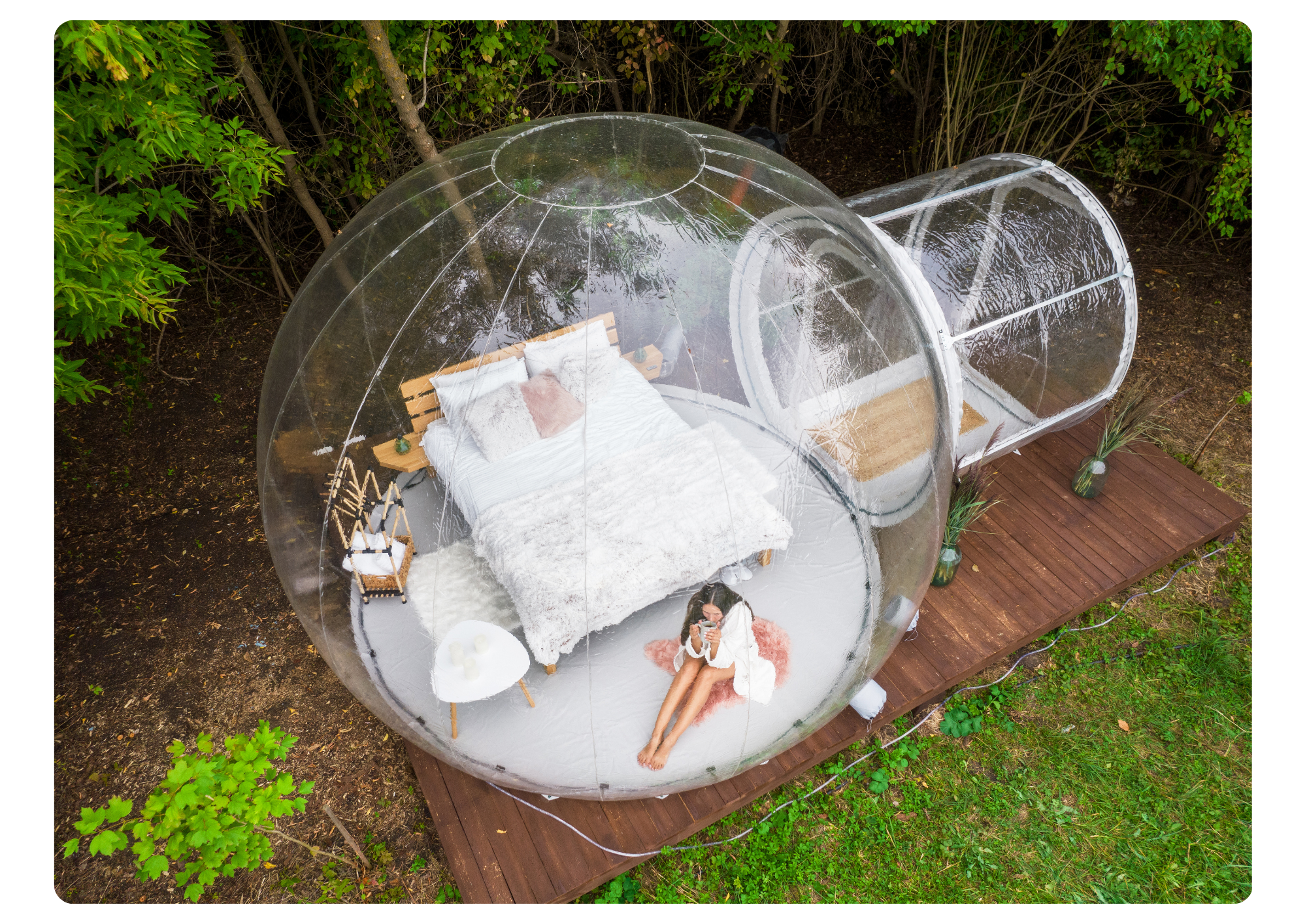
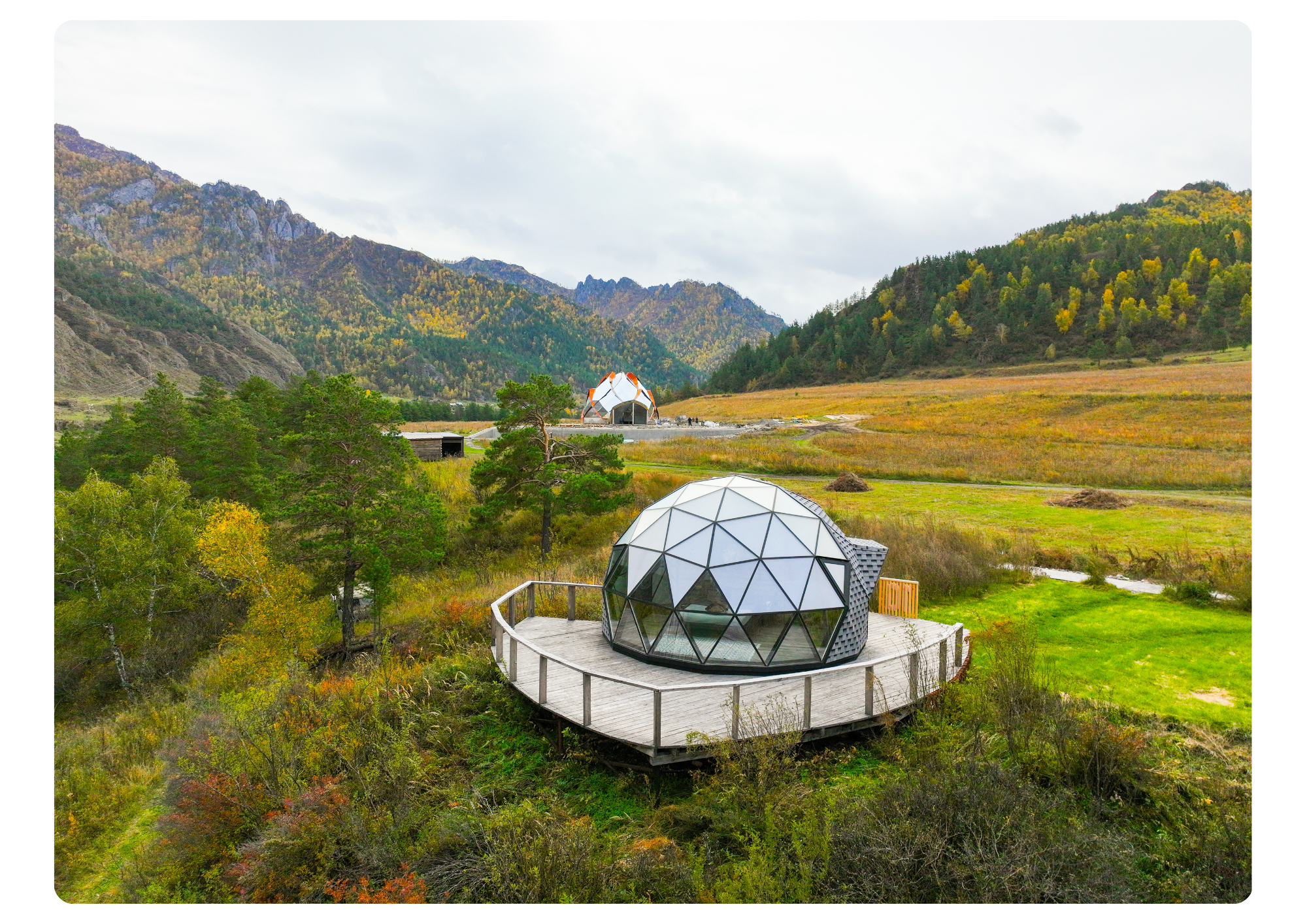
There are also domes and geodesic structures, spherical or geodesic accommodations built with triangular panels, ideal for stargazing and enjoying natural light. Bubble hotels are transparent inflatable structures that allow guests to sleep under the stars, often with a private bathroom and visual separation from the surroundings. Treehouses are wooden structures elevated among the trees, allowing direct immersion in nature and usually not equipped with a bathroom. Mongolian yurts, of Asian origin, are circular tents with multiple layers providing good thermal insulation and suitable for year-round use. Bungalows are small wooden or similar constructions laid out like a house, including living areas, bedrooms, and a basic kitchen.
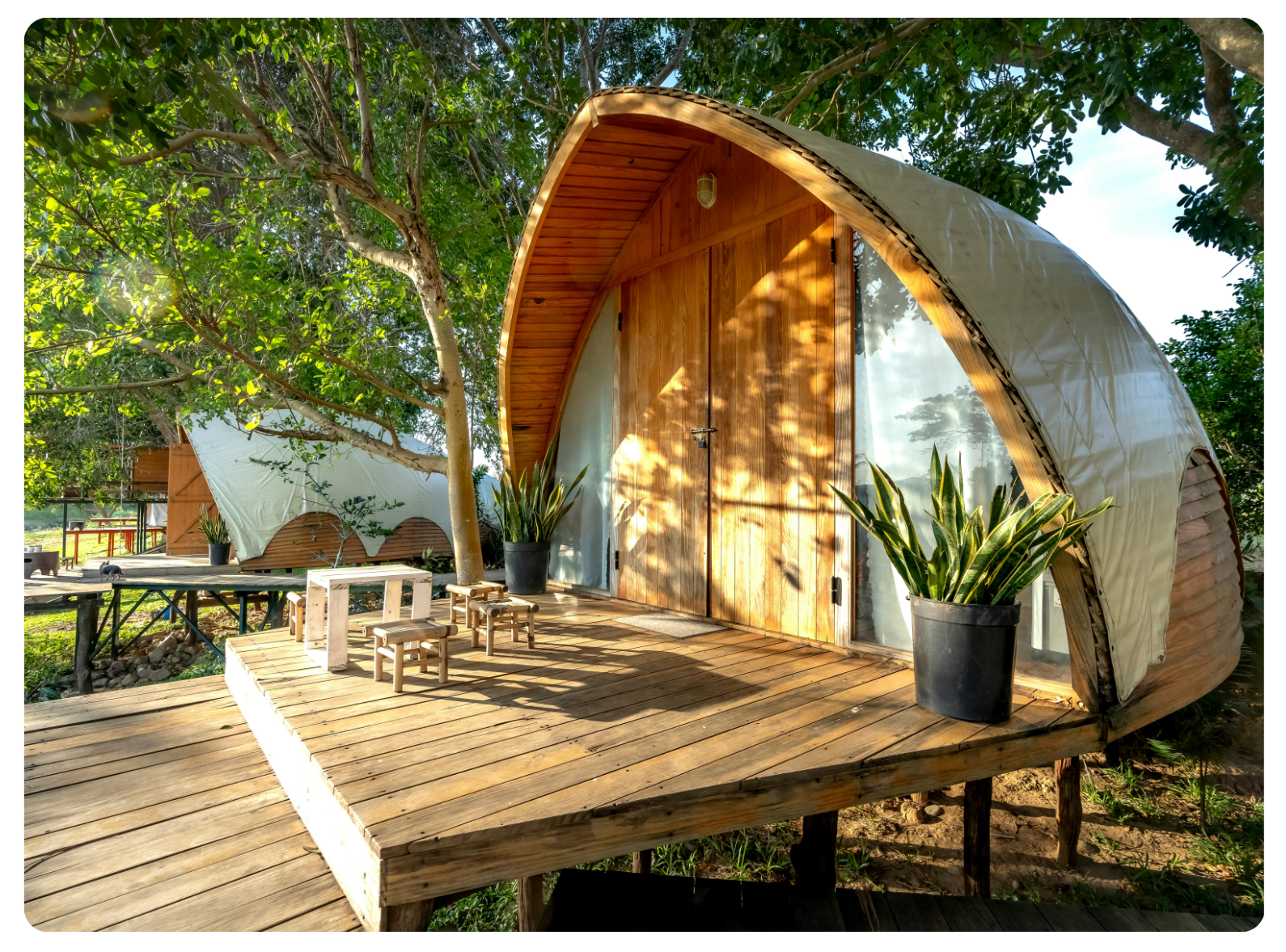
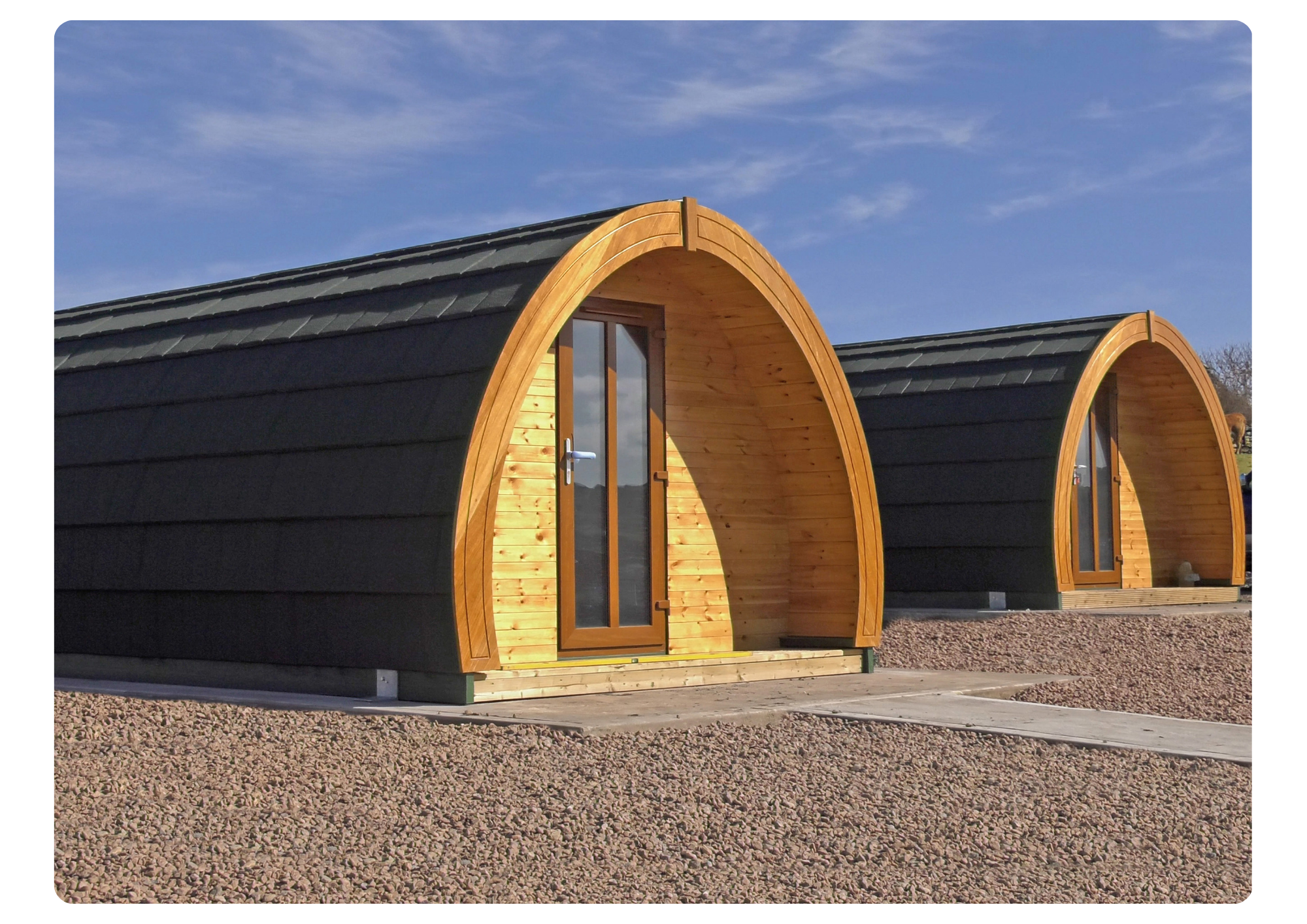
Finally, other innovative accommodations include adapted caravans and roulottes, Nordic-style wooden cabins, semicircular pods, barrel-shaped rooms, A-frame structures, or repurposed shipping containers, formats that stand out for their creativity and provide unique experiences in contact with nature.
Glamping and Its Role in the Future of Tourism
Glamping responds to the new demands of the tourism sector: authentic experiences, sustainability, connection with nature, and comfort. For this reason, it has become increasingly common in campsites, rural accommodations, and innovative tourism projects.
For future tourism and hospitality professionals, understanding this type of accommodation is essential to grasp where the sector is heading and what modern travelers are looking for.






 CALL US
 WHATSAPP